How AI Is Changing Productivity in 2026
Discover how AI is changing productivity in 2026 and learn how to work smarter, save time, and improve efficiency with modern tools.
4/11/20263 min read
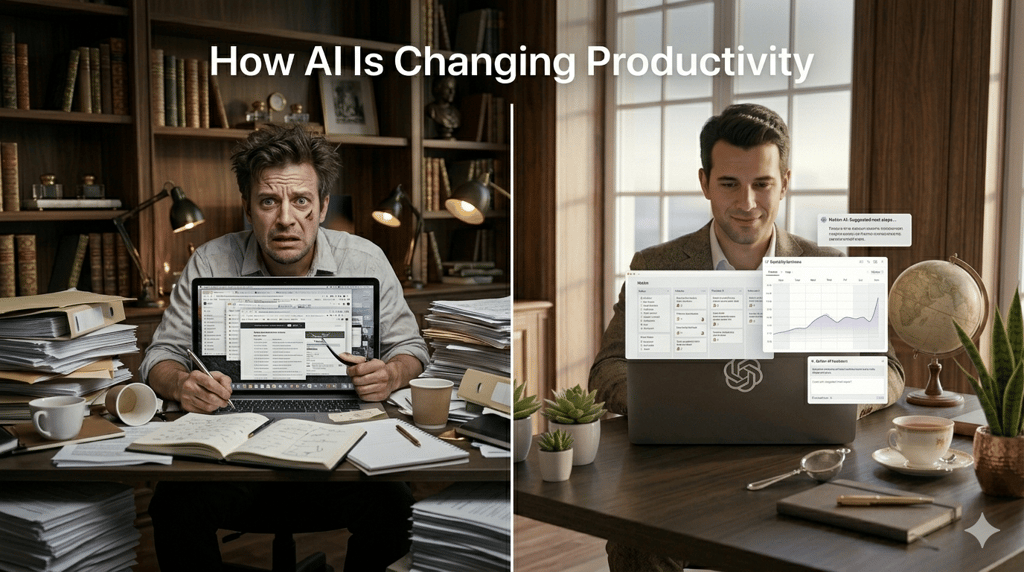
How AI Is Changing Productivity in 2026
The Way We Work Is Being Completely Transformed
Productivity is no longer just about working harder or managing time better. In 2026, the biggest shift in how people work comes from one powerful force: artificial intelligence.
AI is changing how tasks are completed, how decisions are made, and how people organize their daily workflows. From automating repetitive work to helping with writing and planning, AI has become an essential tool for professionals, students, and businesses.
So the key question is:
How is AI actually changing productivity in 2026?
The short answer:
AI is making productivity faster, smarter, and more automated by reducing manual work, improving decision-making, and helping people focus on what really matters.
In this article, we’ll explore exactly how AI is transforming productivity and how you can take advantage of it in your daily life.
Why AI Is Driving the Productivity Revolution
For years, productivity tools focused on helping people stay organized. Now, AI goes a step further—it actively helps you do the work.
Instead of just tracking tasks, AI can:
Complete tasks automatically
Suggest better ways to work
Analyze data instantly
Generate content
Prioritize what matters
This shift from “tool” to “assistant” is what makes AI so powerful.
1. Automation of Repetitive Tasks
One of the biggest ways AI improves productivity is by eliminating repetitive work.
Tasks that used to take hours can now be done in minutes.
Examples
Writing emails automatically
Generating reports
Organizing data
Scheduling meetings
Creating summaries
Why It Matters
By removing repetitive tasks, AI allows people to focus on high-value work that requires creativity and decision-making.
2. Faster Decision-Making
AI helps users make decisions more quickly by analyzing large amounts of data in seconds.
How It Helps
Identifies patterns
Provides recommendations
Highlights key insights
Reduces guesswork
Real Impact
Instead of spending hours researching or analyzing, users can get clear answers almost instantly.
3. Smarter Time Management
Time management is one of the biggest challenges in productivity—and AI is improving it significantly.
AI Can Help You
Prioritize tasks automatically
Suggest optimal schedules
Track how you spend time
Identify inefficiencies
This allows users to work more efficiently without constantly planning everything manually.
4. AI-Powered Writing and Communication
Writing is a major part of modern work, and AI is transforming how it’s done.
AI Tools Can
Draft emails
Write reports
Improve grammar
Adjust tone
Generate ideas
This reduces the time spent writing and improves the overall quality of communication.
5. Better Focus and Reduced Distractions
AI can also help users stay focused.
How It Works
Blocks distractions
Suggests focus sessions
Tracks productivity patterns
Encourages better habits
Some tools even analyze when you are most productive and recommend when to work.
6. Personalized Workflows
One of the most powerful aspects of AI is personalization.
AI adapts to your behavior and builds systems that work specifically for you.
Examples
Custom task suggestions
Personalized dashboards
Smart reminders
Adaptive workflows
This creates a productivity system tailored to your needs.
7. Collaboration and Team Productivity
AI is also improving how teams work together.
Benefits for Teams
Faster communication
Automated meeting summaries
Task tracking
Better project management
Teams can now collaborate more efficiently, even when working remotely.
Real-Life Examples of AI in Productivity
Here’s how people are using AI every day:
A remote worker uses AI to organize daily tasks
A student uses AI to summarize study materials
A marketer uses AI to generate content ideas
A business owner uses AI to automate operations
These small improvements add up to massive productivity gains over time.
Challenges and Limitations of AI
While AI is powerful, it’s not perfect.
Potential Downsides
Over-reliance on automation
Inaccurate outputs in some cases
Privacy concerns
Learning curve for new users
The key is to use AI as a tool—not a replacement for critical thinking.
How to Start Using AI for Productivity
If you’re new to AI, start simple.
Step-by-Step Approach
Choose one AI tool
Use it for a specific task
Build a daily habit
Gradually expand usage
Over time, AI can become part of your routine.
FAQ About AI and Productivity
How is AI improving productivity?
AI improves productivity by automating tasks, speeding up workflows, and helping users make better decisions.
Can AI replace human work?
AI can assist with many tasks, but it cannot fully replace human creativity and judgment.
What are the best AI tools for productivity?
Popular tools include ChatGPT, Notion AI, Grammarly, and others.
Is AI worth using for work?
Yes, AI can significantly improve efficiency and save time when used correctly.
Is AI the future of productivity?
Yes, AI is expected to play a major role in how people work in the future.
Final Thoughts
AI is not just a trend—it’s fundamentally changing how productivity works in 2026.
By automating tasks, improving decision-making, and personalizing workflows, AI allows people to achieve more in less time.
The biggest advantage doesn’t come from using AI occasionally, but from integrating it into your daily routine.
Those who learn how to use AI effectively will have a clear advantage in work, study, and business.
If you want to stay competitive and productive in the modern world, now is the time to start embracing AI.
Brand
Explore our sleek website template for seamless navigation.
Contact
Newsletter
info@email.com
123-123-1234
© 2024. All rights reserved.